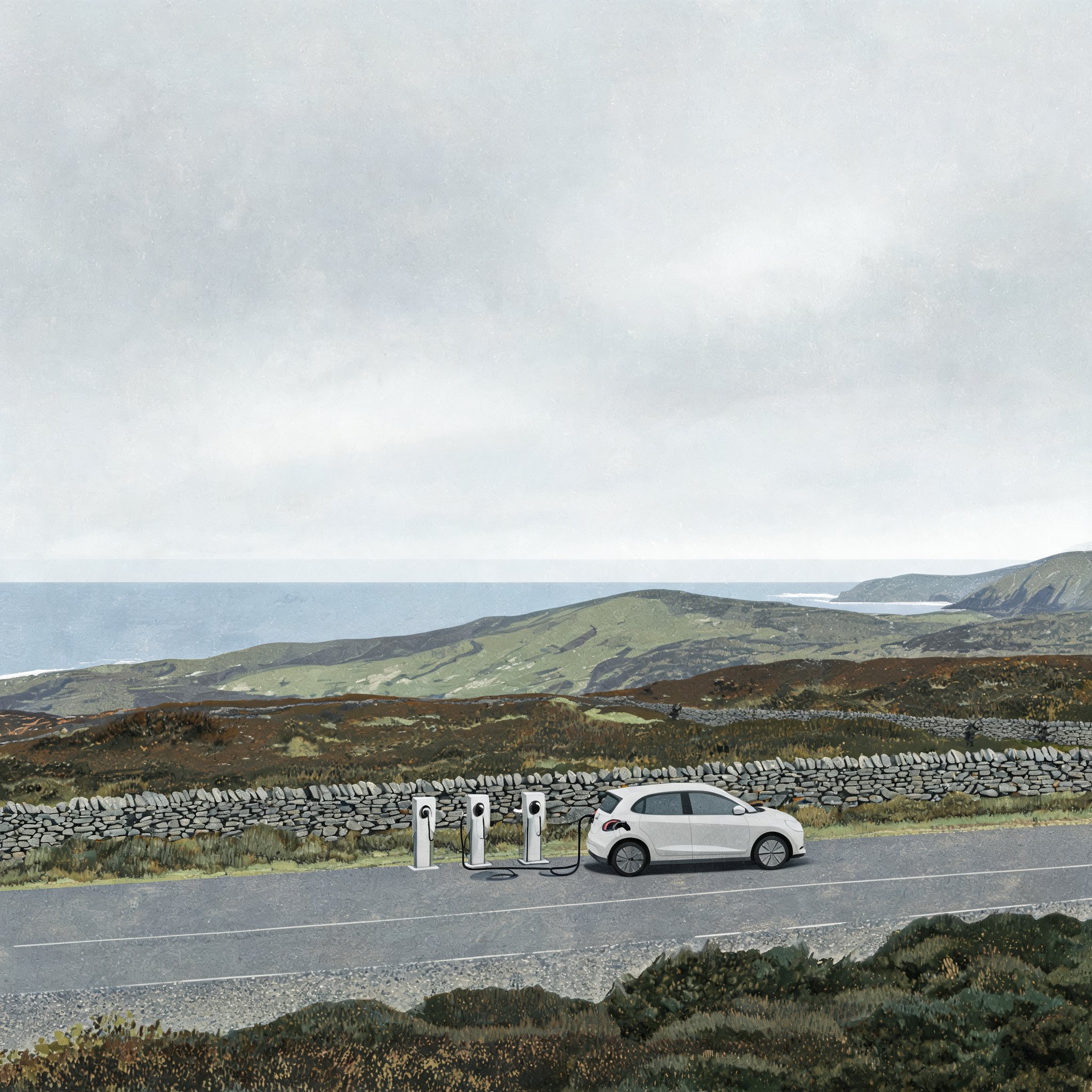
Northumberland County Council has passed a motion to add 36 electric vehicle charging points to its public charging network, with the new units to be spread across 26 locations in the county.
Northumberland is a largely rural county in the northeast of England. It borders Scotland and takes in Hadrian's Wall, the Northumberland National Park and a long coastal strip. The additional chargers extend the public network the council already operates rather than establishing a separate one.
Most of the new equipment is to sit on land the council controls. Seventy-eight per cent of the 36 charge points will be installed on council-owned land, while the remaining units will be placed on land owned by third parties under a licensing agreement. The split means part of the programme relies on arrangements with other landowners alongside the council's own sites, and the licensing route allows points to be placed on property the authority does not own.
Funding, revenue and delivery
The installation is being financed with just over £1 million in external funding from the City Region Sustainable Transport Settlement. That money comes from the settlement rather than from the council's own resources. Revenue generated by the chargers will be used to meet their running costs, management and maintenance, and the funding is intended to carry the rollout through to 2029.
Under that model, the capital cost of the hardware and its installation is covered by the external settlement, while the day-to-day operation of the network is funded from the income the chargers generate. Installation and maintenance will be handled by the council's in-house EV team.
Council position
Richard Wearmouth, the cabinet member with responsibility for transport at Northumberland County Council, said it was good to see more investment going towards improving EV charging provision in the county. He pointed to Northumberland having one of the largest road networks in the country and said it was vital that the necessary facilities are in place to help people get around.
Wider context
The charging decision follows the entry into service of 14 BYD BD11 battery-electric buses in the region a few months ago, adding to the lower-emission transport options available locally.
The council's announcement did not set out the power ratings or connector types of the 36 units, how the points will be divided between the 26 locations, or a schedule for installation within the period running to 2029.